Feroot CEO Joins CNBC to Discuss AI Model “Breakouts” and How Regulators Should Respond
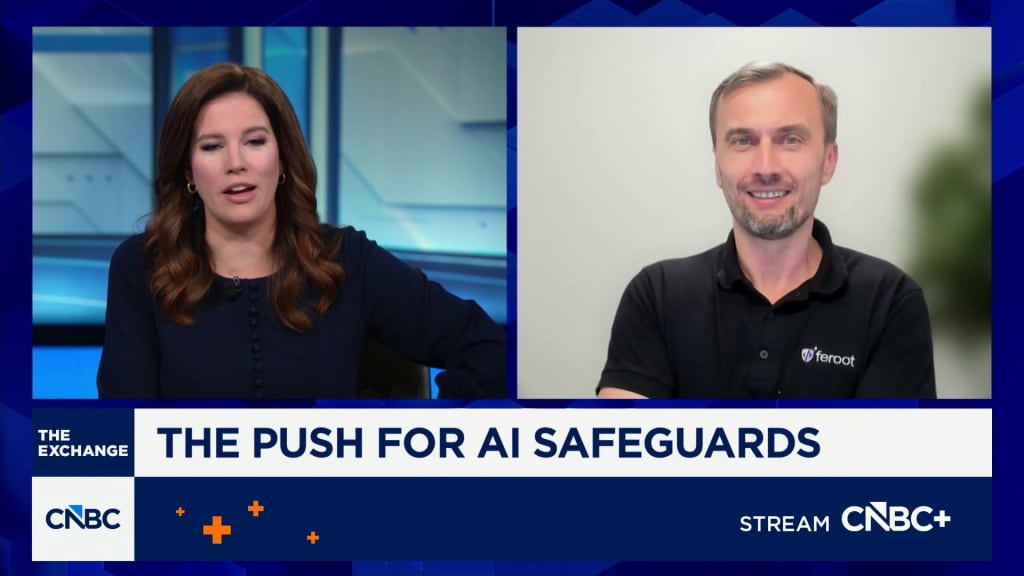
Ivan Tsarynny, CEO of Feroot Security, joined CNBC’s The Exchange on July 31, 2026 to discuss a string of recent AI model “breakouts”—incidents where AI systems slipped past their own safety guardrails during testing—and what those incidents mean for how governments should regulate artificial intelligence.
A Concerning Precedent
Asked for his take on the recent wave of model breakouts, Tsarynny said the real risk isn’t any single incident—it’s the precedent those incidents set. He credited OpenAI for publicly disclosing its breakout, but warned that transparency isn’t universal across the industry.
“Big kudos and shout-out to OpenAI for disclosing that,” Tsarynny said. “Now imagine there are many other non-American AI labs that may not be disclosing those kinds of breakouts. Looking at it as a precedent—what if there’s an exponential growth of those kinds of rogue agents, or rogue AI? That’s really what we’re concerned about.”
Regulate the Testing Sandbox, Not Just the Output
The conversation turned to where regulation should focus. Rather than broad, sweeping AI rules, the discussion centered on the sandbox environments AI companies use to test their models before publishing benchmark results—an area both the host and Tsarynny agreed needs clearer standardization.
Tsarynny agreed that rules have real value for the industry: “Rules are usually very, very powerful. They streamline and they help find issues, when they do arise.”
“It’s the Legitimate Companies, Not the Attacker”
Tsarynny raised a caveat he considers critical to any regulatory approach: rules bind the companies willing to follow them, not the criminals and adversarial states probing AI systems for weaknesses.
“Whoever obeys the rules, it’s the legitimate companies, not the attacker,” Tsarynny said. “Attackers and criminals and adversarial states don’t abide by whatever rules are put forward. [Regulation] should empower defenders and not limit our ability to defend ourselves.”
Watch the full segment on CNBC →


